Search This Blog

Blog Archive

Friday, September 27, 2019

What I Saw this Morning


This is what I saw when I climbed up into the cockpit this morning.
Anchored in a bay off the Potomac River, called Breton Bay

The sun shimmering on the water, so intensely dark blue in this first hour after sunrise. There’s a long, low, white restaurant on the shore with outdoor seating. Glowing in the early morning sun. Empty of course, at this time of day.  A few houses tucked into the trees of the bay surrounding us.  

A football field length away, a middle-aged man in a small clean boat with a roof overhead. We mistook him for a crabber at first, but upon closer inspection, he must have been a scientist of some kind. Moving trays around on the small boat, adding something to some trays. Stacking them away and moving on to another spot on the water.

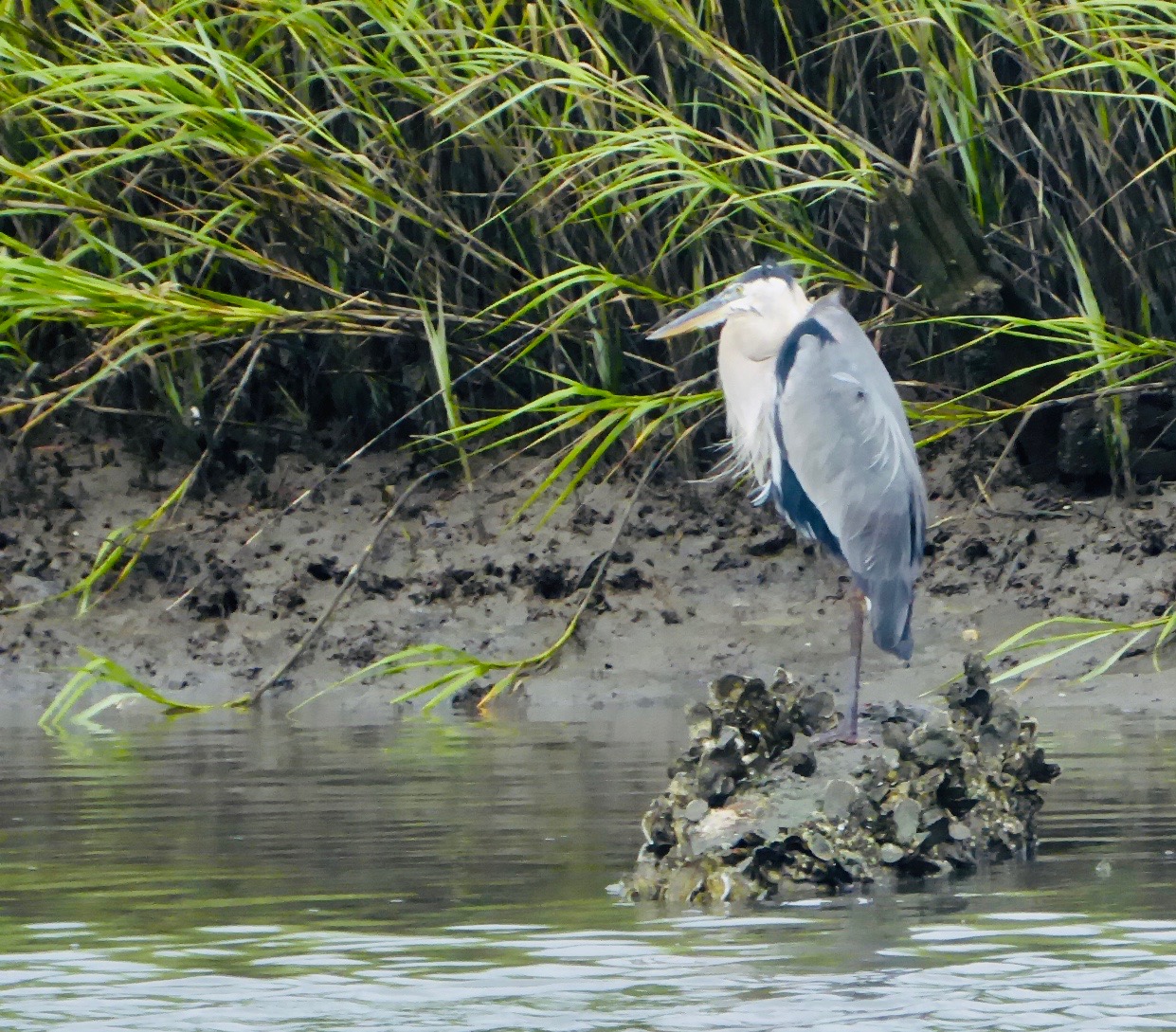
A Blue Heron (maybe a young Great Blue) standing on a channel marker, ostensibly guarding the osprey nest below him. No osprey to be seen anywhere. Through my binoculars there was another Great Blue Heron standing stock-still in the tall grasses on the shore. Thinking he was invisible, I suppose. Just a stick in the grass.

Great Blue Heron
We pulled anchor and got underway. There was an eagle far away, sitting at the top of a dead tree. Would never have seen him without the binoculars. Moments later, another eagle atop a green tree, his white head making him visible against that green even without binoculars. Then he flew, or rather, soared and flew in great sweeping gestures across the sky.


A flock of cormorants, flapping desperately, coming from somewhere low on the horizon and rising across the water to land one by one on the multitude of stakes that made up a fish weir, or trap.

Cormorants

A flock of Pie-Billed Grebe, flapping for all they were worth to maintain a short distance above the water. Their silhouettes with head lower than their feet remind me, oddly enough, of an old film clip—Esther Williams taking a swan dive off a tall board.  If I did that, it would turn into a belly flop.
See the Anhinga, lower right 

One Anhinga. I almost said “one lonely Anhinga” but why should I think an Anhinga is lonely. I always see them swimming alone, their long necks and heads the only parts visible above the water. I saw an Anhinga up really close one time, swimming beneath the walkway on land. The way his feathers spread out just a little so that his wings rested lightly below the surface, holding the bird in perfect balance kind of like a sailboat. Lovely.
He's caught something

Lots of Gull-billed Terns or Sandwich Terns (very hard for me to tell them apart) flying maniacally. Up, flapflapflap, then down, flapflapflap, and up again, and swooping flapflapflap toward one another. Like it’s some kind of bird soccer game, without the ball, of course.
Immature gulls, one here and there, flying, then resting on the water again. Immature gulls seem to be more plentiful up the Potomac. The mature ones are out at the ocean. Do they tire quickly? Is that why they spend more time sitting on the water than other birds we see?

There must have been fish on the last boat.
My husband putting on a long-sleeved shirt over his knit shirt. There’s wind on the Potomac today, on our nose. A fairly common experience for us. “Wherever we want to go, that’s where the wind is coming from.” We can’t sail directly into the wind, so we’re motoring again.

Sailing beneath flight path of Reagan Natl.
The American flag flogging in the wind on our starboard side. Our third American flag since living onboard.  It has some wear left in it before the wind tatters the loose end that whips onto itself and eventually frays.  I remind myself that our flag represents something much bigger than our current Administration.

Still on the Potomac
A cockpit that is in need of cleaning. The cushions will be spread out on a dock and scrubbed within an inch of their lives. The cockpit floor with its’ nonstick is scuffed and will require elbow grease to remove a stain from spilled wine, and another from some mystery liquid. Dust bunnies and dead bugs ready to accumulate on the scuppers when a bucket of water is thrown at them.

A lovely dragonfly
I see where I made errors in constructing some sewing projects.  I should have used black, not white zippers to attach the shade panels on port and starboard, like I did when I remade the aft panel. The bridge between the dodger and bimini was not sewn taut enough to keep the following edge from whopping back and forth in the wind. After 4 ½ years, should I bother to correct that design flaw before selling the boat?

I see my own feet wearing stockings inside a pair of Croc sandals. The socks are like new. Hardly ever worn over the past years on the boat. The Crocs have held up remarkably well, but at some point, something is bound to give way.
Potomac is wide

Behind me, in the galley below, the sink is full of dishes.  My husband fried eggs and made us toast on top of the burner this morning.  Good coffee, too. Made in an AeroPress©. It would hold its’ own in competition with Starbucks. Some folks might think that I would want to get those dishes washed up first thing after breakfast. I am, however, not one of those people, but they will get done…soon… probably. Sometimes writing comes before other more practical matters.

Lighthouse in Chesapeake
The Potomac shorelines are far away. The River is wide now and getting wider. By the end of today, we will have exited out the mouth of the Potomac and rounded the point in order to head back in to shore to anchor at Solomon’s Island, Maryland.

Sunset at last anchorage
After today, there will be just one more day on the water, heading north toward Annapolis, our final destination. I hope we can have one more day to sail. Shut off the trusty diesel Yanmar and just sail Northern Star one more time. Shake out the sails and listen to the sounds of the water and the birds. And the occasional plop of a fish hopelessly leaping for freedom. Can't blame him for trying, but it's important to know where one belongs. And I'm betting that fishes' fate is to be dinner for a bigger fish.

Wednesday, September 25, 2019

Staying Put


With Jax, Titusville, FL 2015
I got out my thesaurus and looked up “bon voyage” today.

There are oodles of synonyms. “Farewell,” “Godspeed,” “Fair winds and following seas.” Aren’t those lovely send-offs? “Have a safe trip.” “Good sailing.” They sound so full of hope and great expectation. So…desirable. So full of fresh wind and salty sea. Ahh, yes.
But coming back to land to stay? When a sailor says, ‘well, I’ve had enough exploring by water. I’m going to plant roots on land and become terrestrial again.’ Then how will we be greeted? Will people say, “Well, my my…Happy…Staying Put.” How does one make that sound like an appealing and wonderful thing to do, to stay put?

New York City
The thesaurus, apparently, harbors bad feelings toward sailors returning to live on dry land. Here are some of the antonyms that I found for bon voyage.  “Stay in place. Stand still. Immobility. Indolence. Stagnation. (gasp) Torpidity. Motionlessness. Idleness. Dormancy. Laziness. Blockage (seriously?) Diminishment. Failure. Worsening.” Jeez. I feel despondent already. I particularly worry about the “Stagnation” and the “Blockage.” Both conjure up images of getting stuck in stinky muck. They all make me nervous to think about the future. A little scared about what to expect next.

Maine, 2016
I remember quite well my anxiety 5 years ago, about moving from land onto the water. We’d sold the house and gotten rid of so much stuff. Lots of stuff! We retired early and I wondered ‘what do I do if I don’t like life on the water?’ There’s nothing to go back to. No home on land. I worried about leaving a life that I was perfectly content with for something quite different. Afraid I would miss the familiarity of a house and driving a car. Worried that my husband and I would find it intolerable to be alone with each other 24/7. Husbands and wives just do not spend all their time together…at least none of the couples that I knew on land did that. Surely it would be a recipe for disaster.


And then we were met with the anxiety of our families. “You know you’re going to die out there on the water, don’t you?” “What if you get caught in a storm?” “But you’re going to stay in a hotel when you get there, right?”

But it turned out that our boat has become our home. When we’ve been gone for a few days, it feels so welcoming to return to our home. It IS home. Our home. It’s not very big and we don’t have room for much of anything that’s not essential, but it’s comfy and I’ve never had any anxiety about being out on the ocean. I feel as safe in this home of ours as I do riding in a car. And much more relaxed.

The boat takes care of us. At anchor, she points into the wind, so that we get the benefit of the breezes to cool us. Sitting in the cockpit to watch the sky change colors at sunset and listen to the water and birds is a daily luxury. It’s hard to imagine not being able to do that when we move off the boat for the last time.
When I step off this boat for the very last time, it’ll be the end of a very good chunk of my life. The end of a way of living. A kind of life that we’ve never been able to adequately describe to anyone who has not lived a cruising life.  So, when it’s gone, there won’t be many people, at least in our near environment, that we can reminisce with about it.  Will that feel lonely?

I know who I am when I live on the boat. What do I mean by that? Not sure I can explain it, but I’ll try.

I know that I am someone who tolerates a change of plans. Weather makes lots of decisions for us.

2017
I can tolerate discomfort; it is ordinary and often quite necessary. When we hit rough water and the wind is stronger than we anticipated, we’ll be bouncing and crashing into waves abruptly and we might be heeled hard, perhaps all day and throughout a long night.
When it’s really hot and still, the only respite comes from fans. We can’t run the A/C away from a dock. If we’re moving, it’s the drone of the engine all day. Sailboat now turned trawler.

I’ve become accustomed to showering less frequently than I did while living on land. Fresh water is something that takes time and energy to make, and anyway, when my spouse and I are equally sweaty and ripe, it doesn’t matter as much.

Marsh Harbor, Abacos 2017
Destroyed by Hurricane 2019
Things stop working sometimes and need to be fixed on the water. That happens on land too, but less often, I believe. They’re mostly small things, but sometimes major issues, too. We discover that the way we are doing something, is causing a different problem for us. The way I’ve been attaching a line is showing hard wear in one spot.  I replace it or make a cover to protect the vulnerable spot.
Oriental, NC 2017

There are places on the boat that need special attention, frequently. I find mildew developing on the ceiling in the head. Need more vinegar and bleach. The isinglass windows in the canvas dodger become smudgy and thick with salt accumulation. I forget to lock a drawer before we’re underway and a knife takes a nose-dive into our nice new teak and juniper sole. We aim for a mooring ball to attach up at our bow and find, not surprisingly, that the rope pendant is slimy and gross.  It’s not uncommon to find my hands in something that is unpleasant. Keeping a manicure has never been in the cards on the water.
I admit there are things on the boat, that I have never liked doing. Putting the fitted sheet on the Pullman bed is one. This usually takes place when I’m tired; crawling over the bed to reach the far two corners, bracing the top of my head against the wall in order to leverage the strength to lift up the mattress while stuffing the sheet underneath, all without wrenching my back.

Maybe my least favorite thing is this scenario. We desperately need some part or tool or some THING that we know is on the boat somewhere. Where is that thing? I remember seeing it. When? Not sure. Was it under the aft bed? Maybe. Was it under the Pullman bed? Did we shove it up into the anchor locker at the bow...because we thought we’d never need it? 
Annapolis 2019

So we tear apart the entire boat. Methodically of course. First one area. Put it back together. On to the next mess. Not there. Groan. The above routine has been repeated several times since we moved aboard 4 ½ years ago. At all times of the day or night. One memorable occasion was at 4:00 AM when we smelled smoke.

So, okay, those are two things I will not miss when we live terrestrially. We’ll still have to remember where we put things, but maybe won’t have to tear everything apart to lay our hands on it. Maybe?

Tangier Island, Chesapeake Bay 2019
When I live on the water, I understand the rules. Rules of the waterways. Rules about safety. Rules about using the VHF radio. Energy and water conservation. Rules determined by the size of our boat. We can’t go there…too shallow. We can’t anchor there…no protection, strong current. We can’t stockpile too much food…not enough room.  It may not work to do laundry and to walk to get groceries all in one day, if the two locations are far apart and both require a long walk back to the boat with our loads. These are practical “rules” that come with boat life.

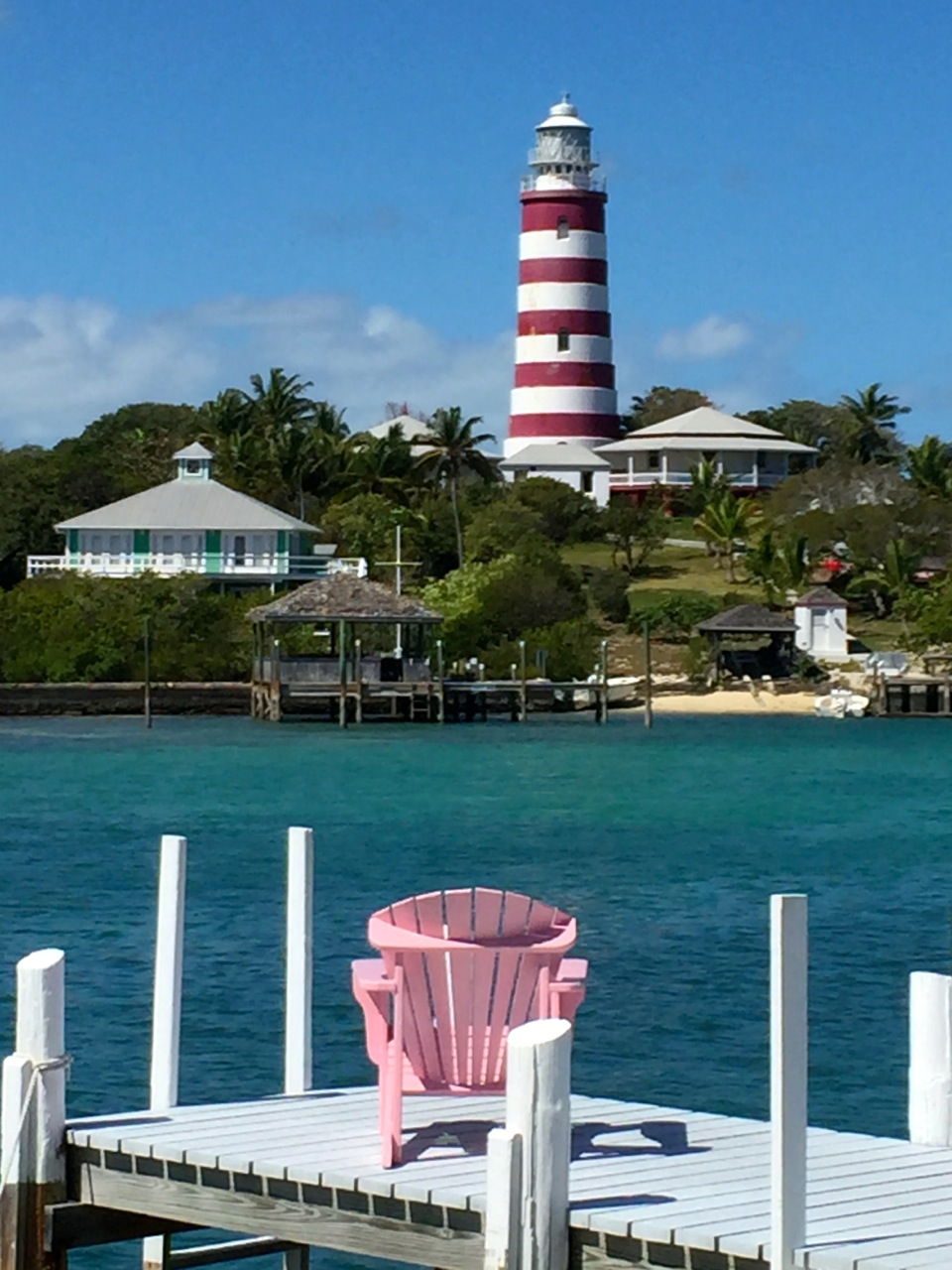
Hopetown, Abacos 2017
Destroyed by Hurricane 2019
But there are so many wonderful “rules,” norms and mores.  When we see a boat on the horizon or next to us at anchor that we know, we will radio them or dinghy over to say “hi.” We were friendly last time we met them; now we are instant friends. “How long are you gonna be here?” “Wanna come over for sundowners?” “Hey, do you need help with that job tomorrow?” “I can come over and catch your lines for you.” “I know electronics…want me to take a look at that for you?”

And when we meet someone new, “Hey, didn’t we see you at the last port?” “Where are you guys from?” “How long you been living on your boat?” “Where are you going next?”

"Stay 500 yds from submarine"
I know my role in this life. I know what’s important. Taking care of each other. Eating healthy. Meeting people we enjoy. Helping others. Watching the weather. Seeing the sunrise and the sunsets. Relishing in the beauty around us whether in the islands or on the East coast.

Philadelphia, 2019
I’ve never been a retired person living on land. Somehow I feel uneasy about that. Living in one place. Every day, going back to the same place.  Our view at sunset, the same every day. The building we live in will not turn to face into the wind in order to catch every breeze. We will become dependent upon air conditioning. We will live indoors, primarily, rather than in and outdoors in the sun and breeze. Will we have anything in common with the neighbors? Will we be invited over for sundowners?


2019
When we meet new people, and we’re asked where we’re from, or where we live, our answer will not receive the same response that we have become accustomed to. This is shallow of me, but I admit that I’ve come to like it when people respond, “Oh, you live on a sailboat…that is the coolest thing!” or some such response.  We will have to become accustomed to a different kind of conversation. It will never be like this. “We live in that building over there.” “Oh, a building! How cool is that?” See what I mean? I will miss that other conversation.
Washington D.C., 2019

So, here we are, currently in Washington D.C. On a mooring ball 200 yards away from our friends who live on their boat at Capitol Yacht Club. They became Jax’s parents until his death this last spring. We’ve met their new rescue dog, Mabel. She’s a sweetie.  Maybe someday we can adopt a rescue dog again when we live on dry land.

Tomorrow we will begin the sail back down the Potomac and up to Annapolis, a four-day journey in all, on our slow home. It will be our last sail. 

New Orleans, 2019
We will spend the next month getting the boat ready to sell in the same place where we bought her 5 ½ years ago.  Then Northern Star will come out of the water and sit on the hard, looking shiny and promising, waiting for new owners. People excited to sail her. Maybe she will get to Colombia yet. Maybe she’ll go through the Panama Canal. Maybe she’ll circumnavigate. I hope the new people take good care of her. She deserves it.
Returning from Caribbean, 2019


Saturday, August 17, 2019

Safety II: STAY.ON.THE.BOAT.


Hand hold above the dodger
This is the other post that I meant to write long, long ago. Owing to some degree of distractibility by beautiful sunrises and sunsets, I never got around to it.

Safety On Deck:

Again, I repeat, I am no expert on sailing. These are my thoughts and observations from living onboard for 4 ½ years. Take them for what they’re worth. 
A bar for bracing our feet against when we heel. It is
part of the center cockpit table.

There are many ways one might be injured on deck aboard a sailboat. One could be hit by an unsecured boom (done that--check) with disastrous consequences. (Luckily for me, not disastrous). Stubbing one’s toes on snatch blocks. (Done that, many times--check) Getting one’s fingers caught in a loaded winch (in other words, the winch is under load from a sail powered by the wind. A finger under the line wrapped around the winch spells, “one less finger.”) Docking can be dangerous. As in, leaving one’s foot between the boot and the pier. With a 16,000 pound vessel, who do you think will win? The boat or your scrawny foot?
EPIRB-an emergency GPS
beacon. "Deploy only in grave
and emergency situations." This
post does not address EPIRB.
Research EPIRB use elsewhere.


A deployed EPIRB will broadcast
boat location and need for emer-
gency assistance to NOAA.
Natl Oceanic & Atmospheric
Administation 
However, I am not going to attempt to address all of those potential hazards.  I will address only one--the most dangerous thing for you on a sailboat is when you do not remain onboard where you belong. Now, it is true that there are a number of safety tools to assist a sailor in retrieving a person out of the water.  We have all of them. 

Man Overboard. MOB.
We have a MOB, Man Overboard which is attached to the aft pushpit. If someone were to fall overboard, whomever sees the unfortunate soul go overboard is supposed to deploy the MOB. Additionally, there is a throw version with a 100’ long floating neon yellow poly line. Theoretically, the person in the water grabs the line and can pull themselves in. We also have a buoyant horseshoe, which is also attached to the boat by a 100’ line. Again, theoretically, the person in the water can put the horseshoe around their torso and be pulled in to the boat.  
Horseshoe flotation attached to boat.

I am saying theoretically because while you are busy falling in, gulping water and flailing around, the sailboat is continuing to move away from you. If it’s moving under engine power, then one cuts the engine to turn around for you, making a tidy “8” in the water in order to pluck you out of the water. If the boat is under sail, however, it’s a bit more complicated. First of all, there needs to be a third person onboard. Someone to steer the boat and someone else to drop the mains’l and handle the foresail in order to get the boat turned around and get back to where you and the boat parted ways. 
Simple throw device. Floating poly
line with loop.

This post is not about how to do that.  It is a worthy topic, but not one that I feel qualified to address.  I will never forget the cautionary comment made to me before a long ocean voyage when I suggested that perhaps we ought to practice doing a man-overboard drill before setting off. *The wise sailor, with many more years of sailing experience than I will ever have, said this to me, “Well, we could. But the reality is that if you fall off, it’s likely going to happen at night and/or in rough seas. The chances of us finding you are not great.” Hmmmm.……..again, hmmmmm. Well, that made me think twice, even thrice.
CO2 cartridge automatically inflates
life jacket when submerged in water.

Clearly, the most important advice for a sailor is to-- Stay. On. The. Boat. So, that’s what we have always put the greatest amount of effort into doing. So far, so good.  Knock on wood (of which we have none on deck.)
So, here is how we stay on the boat.

Quick-release attaches to harness, which
is built into this life jacket
First a word or two about life jackets--a life jacket in and of itself is not going to keep one onboard the boat. But, when the life jacket also has a harness built into it that can be attached to the boat, then you’re in business. Of course, we wear the latest version of life jacket. It automatically inflates without the wearer doing anything, when it becomes immersed in water. That is nice because if you hit your head on the way in, it does not wait for you to pull the cord. It keeps your head above the water because that is its’ only function at that point. Well, that and, there is a whistle attached and a small beacon to help those folks who have the good fortune to still be on the boat, to find you in the waves. I would hope that they can do that for you.
Heavy duty carabiner-type clip to attach to boat.

So, back to the harness built into the life jacket. The harness is designed to be used with a tether. A tether is what connects you to the boat. Tethers are designed, as far as I have observed, with a quick-release that attaches to the harness. The other end of the tether has a different kind of attachment that will fit over stainless attachments and jacklines. 

Pair of stainless eye hooks beside companionway
We have a few different kinds of tethers. I don’t pretend to know which are the best. Read the reviews for that. But I do know that if I’m not physically strong enough to open the attachment or to release myself from the tether, it’s not going to be the right one for me.  Tethers often have two lines, a shorter one and a longer one, both elasticized. Hopefully, you will understand why in a bit.

Pair of stainless eye hooks each side of helm.
Anytime we are in rough seas, we are tethered to the boat. Also, at night, or anytime that one of us is asleep, the other one must be tethered in. One would hate to awaken and discover oneself all alone on a sailboat in the ocean. We put our life jackets on down below.  We attempt to keep the life jackets as dry as we can when they’re not in use.  Would hate to have one automatically inflate unnecessarily. The tether, we attach as we come up on deck. We first attach the harness end to us and then the other end of either the long or the short tether to the boat. 

Elasticized tether with a short and a long line.
There are a set of matching stainless eye attachments right by the companionway so that we can be hooked on even before we step out on deck. There is another matching set of eye attachments on either side of the helm, so if you’re sitting at the helm you can be hanked on close by. 

Clipping onto jackline before stepping out
 of cockpit
What if you have to go up on deck for some reason? First of all, we try to avoid having to go up on deck when we’re under sail, but sometimes it’s essential. That’s when we use what are called jacklines. There is a pair of them, one running from either side of the cockpit, inside the standing rigging all the way to the bow. 
Heavy-duty stainless frame built around each dorade. Frame protects the dorade
and makes for sturdy hand holds.

The jacklines are made of tough braiding designed for that purpose. We would not think of going offshore without having jacklines  in place first. So, when we need to go on deck, we first hank on to the jackline before stepping out of the cockpit.  As I walk forward, the tether moves along the deck with me. Depending upon the design of the boat, a person may have to squeeze to get through a narrow place where the standing rigging is attached to the deck. It is during this process that the usefulness of having two tether lines, one shorter and one longer may become most apparent. 

Squeezing between standing rigging
and structure surrounding dorade.
Obviously walking on deck is best done on the high side of the boat, the windward side. If you fall, you would certainly prefer to fall onto the top of the deck rather than into the water, which would certainly happen on the low side of the sailboat. You’d be attached but a little worse for wear  being dragged through the water.

Stainless hand holds on deck. Note that
tether drags along with wearer across
the deck. Jackline to be set up inside
the standing rigging.
Again, walking on deck is best done in a crouch. Keep the center of balance low. Hang onto something every minute. “One hand for you and one for the boat” is the old saying. On our boat, we have lots of hand holds on deck.  That was one of the things we were especially impressed with when we bought the Saga 43. Sturdy hand holds built onto the dodger, large hand holds built around each dorade fore and aft and long hand holds between the pairs of dorades. 
A shiny dorade. Ventilation to cabin below.

Dorades are the large curved “tubes” that are mounted on top of the cabin roof. They can be turned to face in different directions with the intent to capture breeze and send it below for ventilation, even when it’s raining or there’s wave washing over the deck. And of course, there are lifelines along the perimeter of the entire sailboat. 
"There goes my hat."


Just as an aside, while we were taking the photos for this post, I lost my favorite pink baseball cap with the extra long visor to the wind. Bummer. I knew better. If I had been on the ball, I would have attached a hat clip to the back of the cap and to my shirt before going on deck. Duh. Hat clips are little tethers for your cap.

Should have been wearing this hat clip.
*The wise sailor who helped us sail from Norfolk, Virginia to Antigua in the Eastern Caribbean was Harry Corbett, from Oriental, North Carolina. A great sailor and a good friend. Not to leave anybody out, we were also aided in our 14 day crossing by a 19 year old long time sailor by the name of Luke Johnson, from Hampton, Virginia, who would have gladly gone up the mast or taken on any other task deemed precarious before even being asked to do so. The fact that he was crossing the ocean with three old guys was not lost on him.